03 / MLOps & Telemetry
In progressProduction MLOps Anomaly Detection & Deployment System
Target role · MLOps Engineer
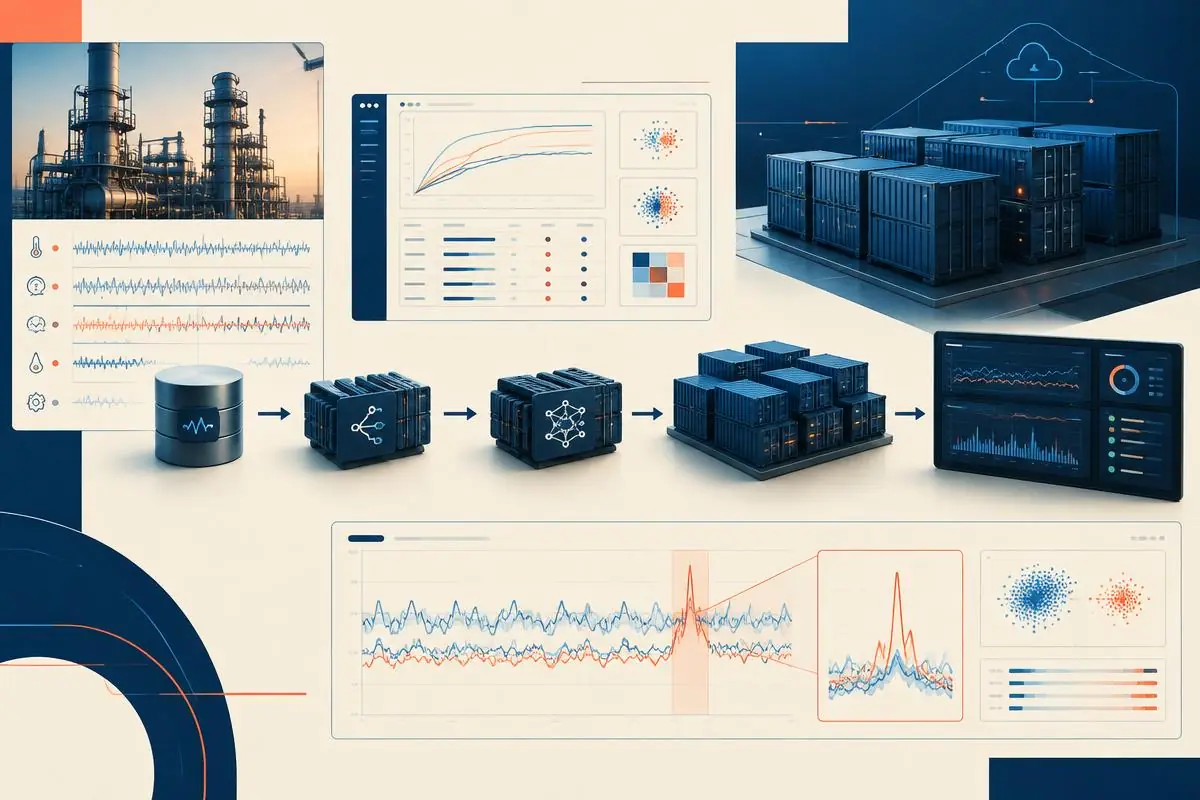
A versioned anomaly pipeline with experiment tracking, drift monitoring, autoscaling, rollback triggers, and observable serving.
- Target: automated drift visibility
- Target: safe rolling updates with rollback
Problem & direction
Core problem: Notebook models can silently degrade without drift detection, automated delivery, and container-health visibility.
An in-progress anomaly-detection workflow connecting versioned telemetry, experiment tracking, drift detection, and observable container delivery. The focus is the complete lifecycle, not only an offline prediction.
How it works
- 01
Version an IoT or security telemetry dataset with DVC
- 02
Train Isolation Forest or XGBoost baselines and register them in MLflow
- 03
Package inference in Docker and deploy with Kubernetes HPA
- 04
Monitor latency, health, volume, and drift with Prometheus, Grafana, and Evidently AI
Engineering details
Detection and drift tracking
PyTorch and Scikit-learn form the modeling stack, while Evidently AI tracks changes in incoming telemetry distributions.
Repeatable model lifecycle
MLflow and DVC support the experiment and versioning workflow around automated retraining.
Containerized deployment
Docker packages the system for deployment. Kubernetes rolling updates and HPA support the production delivery workflow.
Operational visibility
Prometheus, Grafana, and Evidently AI form the planned telemetry layer. Drift visibility and safe rolling updates with rollback are targets to validate.